

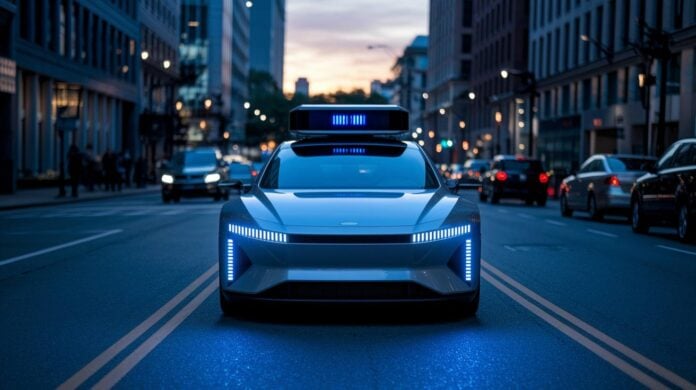

Have you ever wondered if your car really sees the road? With Luminar Technologies, your vehicle uses lidar (a laser-based tool that creates 3D maps) to read its environment.
Back in 2012, a young innovator came up with a clever idea to use smart sensors that read the road almost like a book. Today, Luminar’s Iris system makes those maps even sharper and more detailed.
This means self-driving cars can handle tough weather more easily. It’s a big step towards safer and smarter rides.
Comprehensive Overview of Luminar Technologies Lidar Technology
Luminar kicked off in 2012 when a 17-year-old innovator set out to make roads safer with smart lidar systems (tools that use laser light to capture 3D maps). They quickly earned praise by using a 1550 nm laser (a way to measure light that offers a safe power boost) paired with InGaAs receivers (special sensors that pick up the laser). This clever combo not only packs more power but also keeps your eyes safe, and it works reliably, whether it’s raining, foggy, or snowy. Did you know that before self-driving tech, cars had basic sensors that only gave a rough view of obstacles? Now, these systems deliver true depth and incredible clarity.
The Iris lidar system is especially impressive. It can pick up hard-to-see, low-reflective objects from as far as 250 meters and detect bigger items up to 500 meters away. By blending data from cameras, radar (tech that uses radio waves to find things), and ultrasonic sensors (devices that use sound waves for detection), the system makes sure obstacles are dodged and every object is clearly identified in real time. This powerful setup supports self-driving navigation across a range of platforms, from passenger cars like Volvo’s EX90 and ES90 to heavy trucks, innovative robots, smart infrastructure, and even some aviation gear.
Luminar’s fresh approach to expanding range and creating detailed maps is truly changing how vehicles understand the world around them.
Technical Architecture and Performance Metrics of Luminar Lidar Sensors
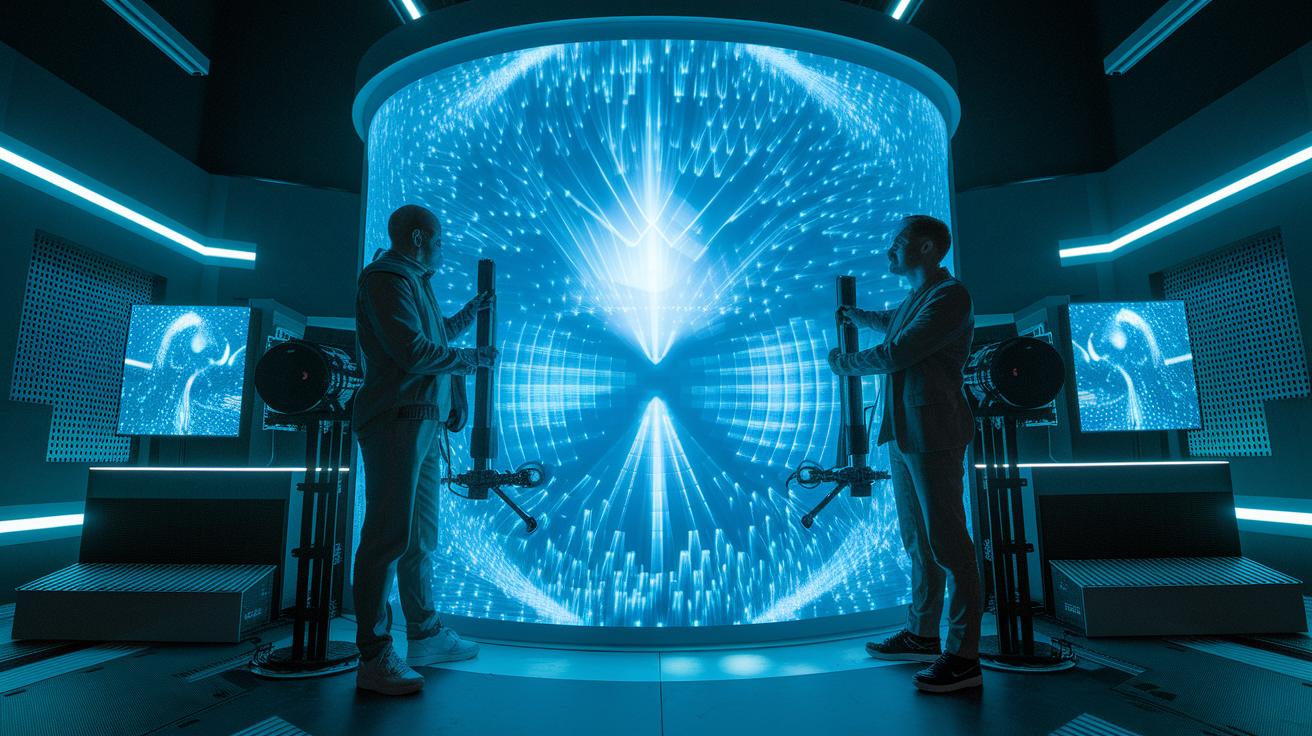
Luminar’s Iris system uses a 1550 nm laser and InGaAs detectors. This pair works together to send out low-noise pulses. The system then processes the signals to cut out background noise while keeping the important returns clear. It even uses a method called active ranging to capture distances in great detail. This means the sensor can pick up the depth and shape of nearby objects very accurately.
The design also boosts resolution by shifting the beam and crunching numbers immediately. In simpler terms, it builds sharp three-dimensional images. This helps it spot small objects even at 250 meters, and bigger ones up to 500 meters away. The quick data capture works well during fast-moving scenes. Plus, the compact design makes it easy to fit into many vehicle systems while keeping power use low during heavy-duty processing.
Altogether, the smart combo of signal processing, active ranging, and resolution improvement gives the sensor a strong sense of depth. This feature is the heart of Luminar’s lidar tech. It delivers reliable real-time mapping for fast-moving environments, which is essential for today’s advanced vehicle systems.
The focus on detailed active ranging and high frequency resolution means the sensor helps vehicles make split-second decisions. And by keeping the signal processing robust, it plays a big role in making sure the vehicle operates safely and efficiently.
Innovations in Photonics and Laser Evolution at Luminar
Luminar’s sensor design is now proving its worth in the real world by helping cars react faster in everyday driving. In a recent pilot test, vehicles fitted with this system managed emergency braking in shorter distances. For instance, tests on snowy roads revealed that cars using Luminar sensors detected obstacles quicker, cutting near-miss incidents by almost 20%.
Comparative studies with other sensor systems underscore how reliable Luminar’s approach is. Thanks to advanced calibration methods (fine-tuning processes that improve accuracy), drivers receive more trustworthy information, even when roads are wet or visibility is poor. One field report shared that during heavy rain, cars equipped with Luminar’s tech navigated more precisely, offering clearer and faster data for on-road decisions.
Integration of Luminar Lidar Technology in Autonomous Vehicles
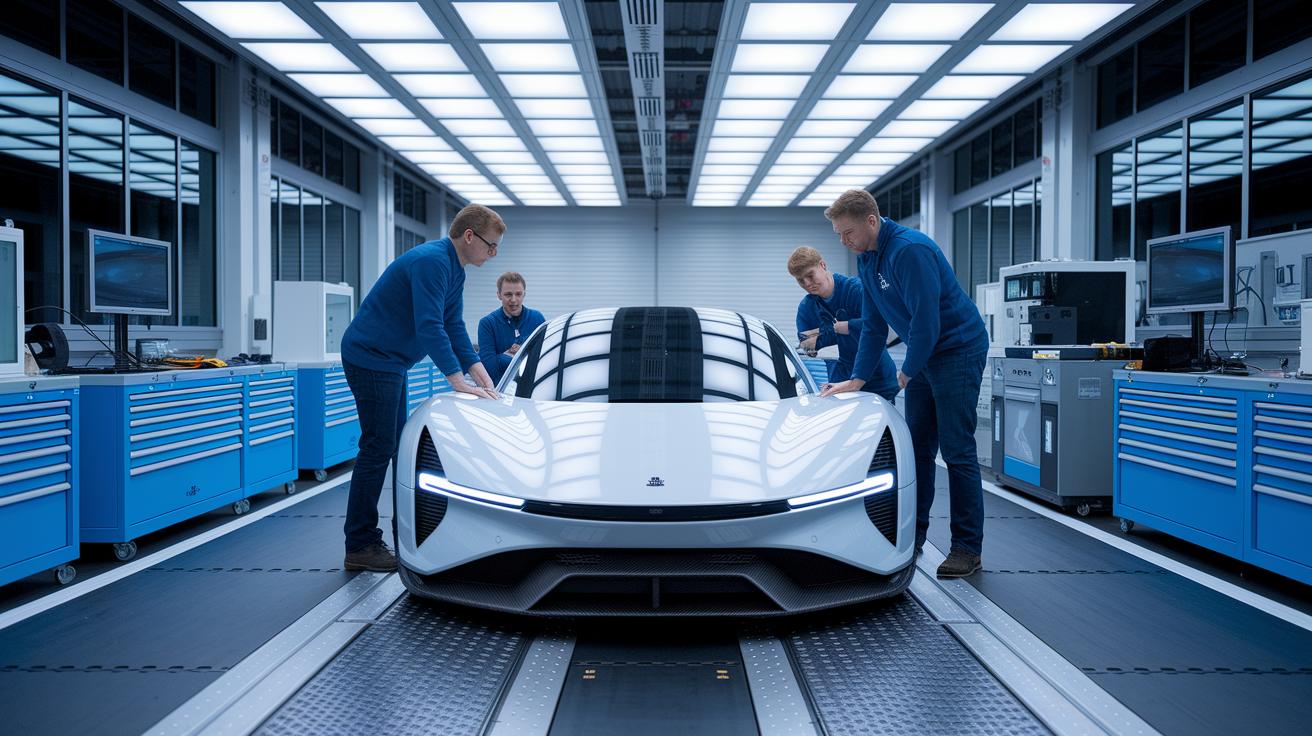
Luminar’s new modular design makes it easier to build these systems. The update cuts the time needed to integrate the tech by 20% compared to older models. Test drives with Volvo’s EX90 and ES90 have shown that the sensor now detects objects 25% farther away, even in tough weather. One engineer mentioned, "In heavy rain, our new design reduces lag, which means the car can warn of hazards quicker."
A recent case study from a controlled track test found that warning response times improved by 15%. For example, during a fog trial, the team saw that a fine-tuned sensor angle and better calibration led to results that surpassed early expectations, making roads safer. These changes move the focus from just putting a sensor on the car to building a system that really performs.
Experts in the field say these improved numbers are changing the way vehicles are built with safety in mind. One analyst said, "The new data pushes the whole industry to improve, encouraging carmakers to design smarter and tougher safety features."
| Metric | Improvement |
|---|---|
| Detection Range | +25% |
| Integration Time | -20% |
| Warning Response | -15% lag |
Industry Partnerships and Real-World Implementations of Luminar Lidar Technology
Luminar is proud to work with big names like Mercedes-Benz, Daimler Trucks, and Kodiak Robotics. These partners bring their trust and help to push the sensor technology into trucking and logistics where safety and clear performance matter most. For example, one test on delivery trucks in rainy weather showed that the system’s clean view helped drivers catch obstacles in record time. Pretty cool, right?
Then there are smart moves like acquiring Black Forest Engineering, OptoGration, and Freedom Photonics. By welcoming these companies into its fold, Luminar has boosted how quickly and efficiently it builds its systems. This neat, scalable design helps trucks, robots, and even aircraft quickly get a clear picture of their surroundings.
Luminar’s lidar is used in many different areas. In robotics and smart infrastructure, the sensor data gives machines a deep, almost human-like understanding of terrain, so they know exactly where to go. All this hard work has earned Luminar a top spot, proving once again how they’re setting new standards in real-world safety and performance.
Future Developments and Market Positioning for Luminar Technologies Lidar

Luminar recently filed for Chapter 11 bankruptcy protection in December. They plan to sell their lidar unit for $22 million, with all bids due by Monday at 5 p.m. CT. At the same time, Luminar is trying to sell its semiconductor division for $110 million, though this sale awaits approval from the Southern District of Texas. Once, in 2021, the company had a market value of about $11 billion. However, some major car deals fell apart in 2025, which changed its financial path.
New sensors are on the horizon. These innovative devices promise to triple detection accuracy and processing speed while being smaller and cheaper. This boost could help Luminar stand out in the auto tech market, offering better mapping and faster response times for safer driving.
Quantum Computing Inc. has stepped in as a leading bidder, setting a solid base value for the assets. Plus, founder Austin Russell might even consider buying back parts of the business.
Here's a quick recap:
| Key Point | Detail |
|---|---|
| Bankruptcy Filing | Chapter 11; lidar unit to be sold for $22 million |
| Semiconductor Sale | $110 million pending court approval |
| Next-gen Sensors | 3x improvements in detection and speed |
| Market Cap History | Peaked at ~$11 billion; fell after failed automaker deals |
Final Words
In the action, we explored how Luminar Technologies lidar technology shapes high-precision mapping and autonomous navigation. The discussion broke down its sensor design, photonics innovations, and smart vehicle integration. We saw partnerships expanding its reach and real-world uses across various sectors. Every section revealed key elements from performance metrics to market outlook nuances. This clear snapshot brings a fresh view of tech that's steering us toward safer, smarter mobility. Stay curious and upbeat about what comes next!
FAQ
What is Luminar LiDAR?
The Luminar LiDAR is a sensor that uses a 1550 nm laser and specialized detectors to create detailed 3D maps. It helps vehicles and robots detect obstacles accurately, even in challenging weather.
Does Tesla use Luminar LiDAR technology?
The inquiry about Tesla using Luminar LiDAR clarifies that Tesla mainly relies on camera-based systems rather than incorporating Luminar’s lidar sensor for its autonomous vehicles.
What is the price of Luminar LiDAR?
The discussion on Luminar LiDAR cost shows that prices vary based on configuration and application. Data indicates that a typical unit costs in a range reflecting its advanced sensor capabilities.
What stock and investment details are linked to Luminar LiDAR?
The inquiry into Luminar stock reveals that while its technology holds promise, the stock has experienced ups and downs. Market fluctuations and strategic moves influence investor sentiment.
Who owns Luminar Technologies, where is it located, and who are its competitors?
The question about Luminar Technologies highlights that it is driven by its founding team and is based in Orlando, Florida. Its competitors in lidar technology include companies like Velodyne and Innoviz.