



Ever wonder how companies work through hundreds of job applications so fast? They use an applicant tracking system. This system acts like a smart helper that collects resumes, sorts out skills, and points out the best candidates.
It cuts down on piles of paperwork so hiring teams can actually connect with great talent. More than 90% of Fortune 500 companies use this tool to keep their hiring neat and speedy.
In this post, we’ll explain what an applicant tracking system is and how it makes finding top talent much easier.
Applicant Tracking System Defined: A Clear Explanation
An applicant tracking system is a tool that helps simplify hiring. It automatically collects, sorts, and reviews job applications. Think of it as a digital helper that pulls in resumes, cover letters, and interview notes from different sources and puts them all in one spot. Fun fact: More than 90% of Fortune 500 companies use it to keep hiring smooth.
This system clears up the clutter in candidate data. It lets recruiters easily search for specific skills, experience, and keywords that match what the job needs. It works like a funnel, filtering out the best candidates so hiring teams can focus on those who fit the role best. Picture an application arriving with skills and job history neatly organized for you to review quickly.
Besides simply sorting resumes, this system can do more. It breaks down resumes, scans for keywords, and keeps detailed records of each candidate, including all past communications. With top companies leaning on it heavily, this tool proves its worth by speeding up hiring and making the process a lot easier.
Key Features of an Applicant Tracking System

An applicant tracking system is built to take the hassle out of hiring by automating many everyday tasks. It neatly organizes candidate records so recruiters spend less time on manual reviews. Think of it like sorting letters into clearly labeled boxes, where every detail has its rightful spot.
- Automated job postings spread your opportunity across multiple job boards and social media channels. Imagine hitting a button that sends your job ad far and wide, like a digital megaphone.
- Customizable screening based on keywords, skills, and experience helps you pick out the best candidates. It’s like using a fine sieve to catch only the most desirable grains of talent.
- Resume parsing extracts and organizes candidate data quickly. Consider it your digital librarian, making sense of all those resumes in a flash.
- Scheduling automation arranges interviews and follow-ups without extra back-and-forth. This feature syncs calendars so you can spend more time connecting with candidates.
- A built-in CRM lets you nurture talent over time, keeping in touch with potential stars in your hiring process.
- Detailed analytics on time-to-hire, cost-per-hire, and candidate quality act like a helpful scorecard to refine your recruitment strategy.
All of these features work together to streamline every step of hiring. Recruiters can focus more on building relationships with great candidates instead of getting bogged down by repetitive tasks. In truth, the system’s smart automation transforms the recruitment process into a smoother, more efficient experience that meets the evolving needs of hiring teams.
Benefits of an Applicant Tracking System for Recruiters
An applicant tracking system isn’t just about automating tasks, it also makes the candidate experience better. It sends real-time updates and clear messages that keep applicants in the loop, easing that common hiring uncertainty. Imagine getting a friendly update that tells you your application is moving along. It builds trust and keeps everyone engaged.
This system also helps everyone get treated fairly. It uses the same set of rules for every candidate, which cuts out personal biases and helps boost diversity. Think of it like comparing apples to apples; each candidate’s score comes from the same objective measures.
Plus, the built-in reports make it easy for recruiters to see how things are going. They get clear data on candidate backgrounds and how candidates progress at each stage, which helps them fine-tune their hiring plans. This valuable insight not only makes the process fairer, but also drives steady improvements in recruiting.
Integrations for Applicant Tracking System with Digital Recruiting Tools
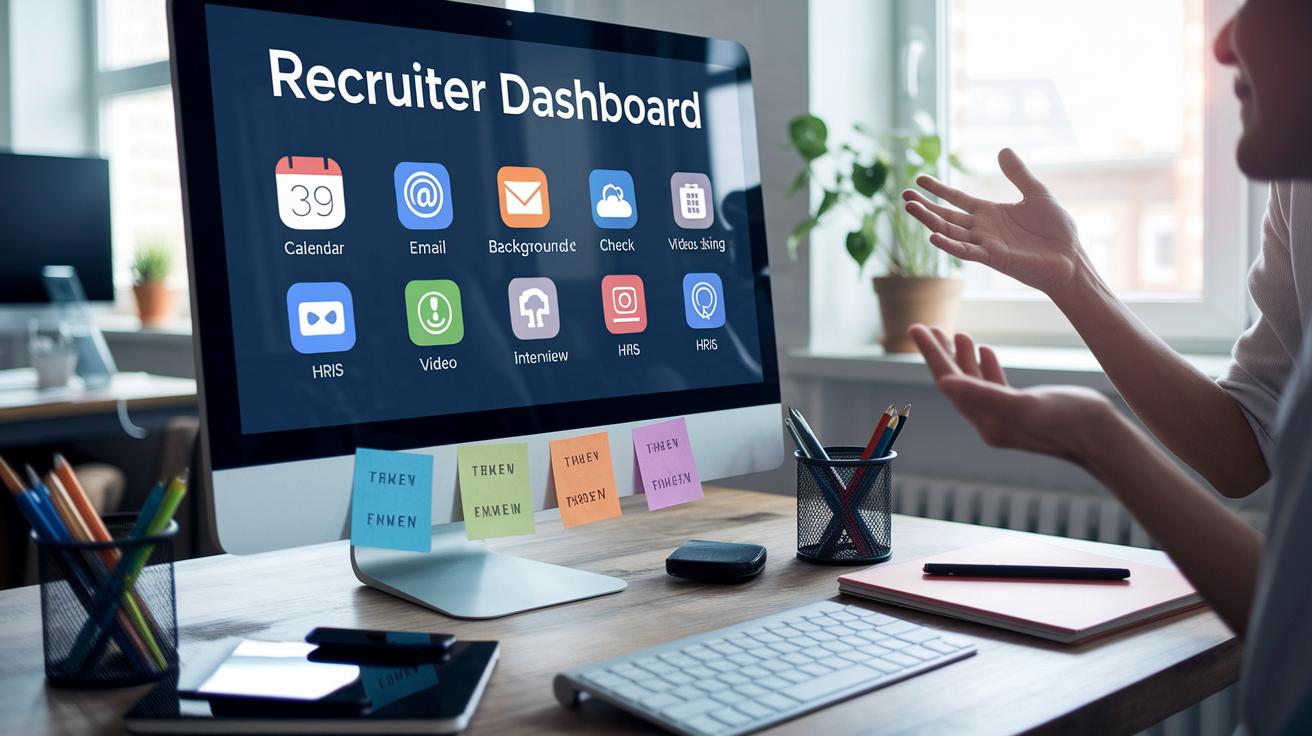
Modern applicant tracking systems easily link up with many digital recruiting tools to simplify the hiring process. They work hand in hand with background-check services, assessment tools, video-interview platforms, as well as calendar and email apps. And when they connect to HRIS (a system that manages employee information), candidate records stay up to date across all systems. This setup helps cut down on manual mistakes and makes it quicker for recruiters to find the latest candidate details without spending hours on data entry. For example, when linked with a calendar app, interviews can be scheduled automatically based on free slots, saving time and boosting efficiency.
These connected hiring tools improve the recruitment process by uniting different communication channels into one smooth workflow. Thanks to seamless software links, interview feedback, candidate profiles, and follow-up tasks update across systems automatically. Think of it as a well-run control center that reduces manual work and keeps everyone in the loop. This smart connection helps hiring teams assess candidates faster and more accurately so they can focus on building relationships while technology handles routine tasks. In the end, these systems lead to faster decisions and a smoother experience for everyone involved.
How to Select the Right Applicant Tracking System
Picking the right tracking system is like matching a tool to your specific hiring challenges and goals. Start by pinpointing what makes your hiring process slow, for example, messy resume sorting or delays in setting up interviews. Check if the system easily connects with your existing HR software and can grow as your hiring needs do. A clear, easy-to-use design and solid support from the vendor help your team learn quickly and get on board sooner. And don’t forget to compare the costs with the benefits to avoid any surprises later on.
| Selection Criteria | Description | Importance | Questions to Ask |
|---|---|---|---|
| Recruitment Challenges | Look at your current hiring hurdles and figure out where delays happen. | High – spotting issues helps you pick the right fix. | What are the main issues slowing our hiring process? |
| System Integration | Think about how well the new system connects with the HR tools you already use. | High – smooth connections save time and reduce errors. | Will this system easily work with our current software? |
| Scalability | Check if the system can grow with more job applications and postings. | Medium – it’s important for long-term use as your company expands. | Can it handle an increasing number of applicants? |
| User Experience | See how friendly the interface is for recruiters and hiring managers alike. | High – a simple design means less training and smoother work. | Is the system easy enough for everyone to use? |
| Cost/Budget | Review pricing, overall costs, and the kind of support available from the vendor. | Critical – the system must fit your budget while meeting your needs. | Does the system match our financial limits and requirements? |
By asking these clear questions and weighing each of these factors, you’ll be able to find a system that not only streamlines your recruitment process but also helps automate your hiring tasks. This thorough check sets you up for a smooth transition to an ATS (Applicant Tracking System, a tool that helps manage job applications) that meets your goals and keeps your hiring process efficient over time.
Emerging Trends in Applicant Tracking System Technology

The next wave of applicant tracking systems is rising with clever functions that will shape future recruitment. One cool trend is using predictive analytics (tools that analyze data to predict outcomes) to help guess which candidates might excel. Think about it: you get hints about a candidate’s likely success even before you decide to hire. Another exciting trend is AI-driven skill matching (artificial intelligence that quickly sorts through resumes) that scans resumes almost like a chef picking out the best ingredients for a recipe. Plus, systems now create personalized messages based on each candidate’s profile, making the whole application process feel friendlier and more engaging.
These advances are changing the way teams hire. Hidden bias-reduction tools work quietly to give fair evaluations while features like virtual reality job previews and automated chatbot screenings add a practical, interactive layer to the process. In truth, these trends make hiring feel intuitive and efficient, letting recruiters focus on building strong teams instead of getting bogged down by routine tasks.
Applicant Tracking System Compared to Other HR Software
An applicant tracking system focuses solely on hiring. It is built to handle job postings, sort through resumes, and rank candidates by clear job rules. In contrast, an HR Information System takes care of an employee’s entire lifecycle, while CRM software works on keeping in touch with potential hires. Think of the ATS as a quick, dedicated tool for sorting candidates, unlike broader systems that track everything about an employee.
The ATS is designed to manage large volumes of applications. It uses simple tools like resume scanning and keyword filters to go through many resumes fast. Other systems store all sorts of employee details or focus on keeping relationships active through regular follow-ups. Basically, the ATS makes sorting candidates as easy as checking off items on a list, while other tools offer a more general view of HR records.
The ATS also shows you specific numbers, such as how long it takes to hire someone and the quality of candidates. On the other hand, other HR software gives broader insights that look at overall employee data.
Final Words
In the action of streamlining recruitment, we explored what is an applicant tracking system by breaking down its features, benefits, and smart integrations. The deep dive covered core functions like resume parsing, automated screenings, and key selection criteria that make tech work for hiring.
We ended by highlighting emerging trends that promise even more ease in managing candidates. The future feels bright for recruitment with these digital upgrades making hiring simpler and more informed.
FAQ
Frequently Asked Questions
What is application tracking system in recruitment?
The application tracking system in recruitment is a software that automates and organizes job applications by sorting resumes and centralizing candidate information for smoother hiring.
What is an applicant tracking system used for?
The applicant tracking system is used for managing candidate applications, screening resumes, scheduling interviews, and maintaining clear communication to help recruiters work faster and smarter.
What are examples of ATS systems?
The examples of ATS systems include popular tools that streamline recruitment. Many companies use platforms like Workday, which offers applicant tracking along with broader HR features.
Is Workday an applicant tracking system?
The Workday platform includes features for tracking applications as part of its comprehensive HR suite, though it is generally recognized as broader HR software rather than a dedicated ATS.
How do I pass my resume through ATS?
Passing your resume through an ATS involves using clear formatting, including job-specific keywords, and avoiding complex designs so the system can easily extract and review your information.
Can ATS read scanned documents?
The applicant tracking system may not read scanned documents accurately since they require text-based resumes for proper keyword extraction and automated processing.
How to tell if a resume passes an ATS?
A resume passes an ATS when it features clear formatting, relevant job keywords, and simple layout, ensuring the system can parse it without confusion.
Are there free applicant tracking systems available?
Free applicant tracking systems are available, though they often offer fewer features than paid options, which typically provide more robust tools for managing the hiring process.