



Ever wonder if technology could change how you get work done? In 2025, new trends are making everyday tasks smoother and quicker. Imagine advanced AI (computer programs that can learn and think) and smart robots teaming up like a skilled crew to help businesses perform better. With more money going into creative tech solutions, companies are ready for big improvements and a brighter future. This post lays out the trends that might just change the way we work and open the door to a smarter tomorrow.
Key Emerging Technology Trends 2025 Overview
Tech trends in 2025 are set to change how work gets done. Think of it like this: smarter, helpful computers are stepping in to make everyday tasks easier and boost how well companies perform. With smarter automation, keen data tools, and sleek computer vision (tech that lets machines see and understand images), work becomes faster and more efficient.
Companies are shaking up their plans. They’re adding flexible, smart systems to run their daily operations so they can stay ahead in a fast-paced market. In fact, investments in generative AI (an AI that creates new ideas or content) jumped from 55% in 2023 to 75% in 2024. Many businesses are even seeing returns of almost 3.7 times. Wow.
At the same time, cloud-native platforms (internet-based platforms that are built for today’s digital work) and connected device setups are on the rise. These tools help all parts of a company communicate smoothly and respond quickly to changes.
- Large Action Models (LAMs): Advanced AI that tackles complex tasks on its own.
- Agentic AI: Technologies that make decisions independently and manage intricate strategies.
- Business Orchestration & Automation Technologies (BOAT): Integrated tools that link people, systems, and data in one smooth operation.
- Industry Cloud Platforms: Cloud services tailored to the specific needs of different industries.
- Sustainable Technology: Eco-friendly innovations that help lessen environmental impact.
- Living Intelligence: A blend of AI, smart sensors, and biotech that adapts and learns.
- Generative AI: Fast-growing tech used for creative work and business insights.
- AI-Driven Robotics: Intelligent robots that can see, think, and decide in real time.
- AI-Driven Enterprise: Systems that give businesses real-time, smart decision support.
- Quantum Computing: Super-fast computers based on quantum physics (the science of tiny particles) that solve big problems.
These trends point to a future where technology not only helps companies run smoother but also completely changes business models across many fields. Digital transformation is opening up bright, innovative paths for industries everywhere. For more details on these exciting changes, check out the full story at emerging trends in technology.
Artificial Intelligence Advances Shaping 2025 Technology Trends

AI is at the heart of today's digital changes. New systems are not just repeating old ideas, they’re breaking new ground with practical uses and fresh challenges.
- Large Action Models (LAMs): Think of these as next-level systems that carry out complex tasks automatically. Imagine a tool that manages supply chains and instantly tweaks plans when things change.
- Agentic AI: These platforms decide in real time by reading the situation around them. Picture an AI that adjusts business processes on the spot by understanding live data.
- Generative AI: This tool is moving beyond just making content. It now helps in areas like flexible design and targeted customer engagement. Fun fact: early generative AI was even used to draft layout designs in minutes!
- Big Data Analytics Surge: AI is merging with everyday data to predict maintenance needs and boost performance. For example, a retail system might spot potential stock issues exactly when they’re about to happen.
Businesses are now facing real challenges like protecting data and integrating new systems. Yet, these smart tools are not just streamlining work, they’re also providing services that adapt to customer needs, adding real value to everyday interactions.
Quantum Computing Progress Driving Technology Trends 2025
Quantum computing shatters traditional limits by using tricks like superposition (where particles can exist in several states at once), entanglement (cells staying linked even when apart), and interference (waves mixing together). It’s like having a computer that checks many possibilities at once instead of one after another. Investment in quantum hardware and studies is up by 30% each year, showing more folks trust these systems to solve complex issues.
In healthcare, quantum computing is opening doors to amazing new applications. These systems sift through enormous amounts of data in no time, speeding up drug discovery and custom treatments. Predictive analysis tools built on quantum power spot hidden trends, giving real-time insights for sharper treatments and smoother operations. This shift is changing how industries tap into data to boost results and simplify tricky tasks.
New quantum encryption methods are also stepping up to protect sensitive details with quantum-resistant codes that fend off cyber threats. With quantum computing set to spark big changes, many businesses, especially in healthcare and finance, are getting ready for a future where smart processing and solid security work side by side.
Next-Gen Connectivity: 5G, 6G, and IoT Integration for 2025
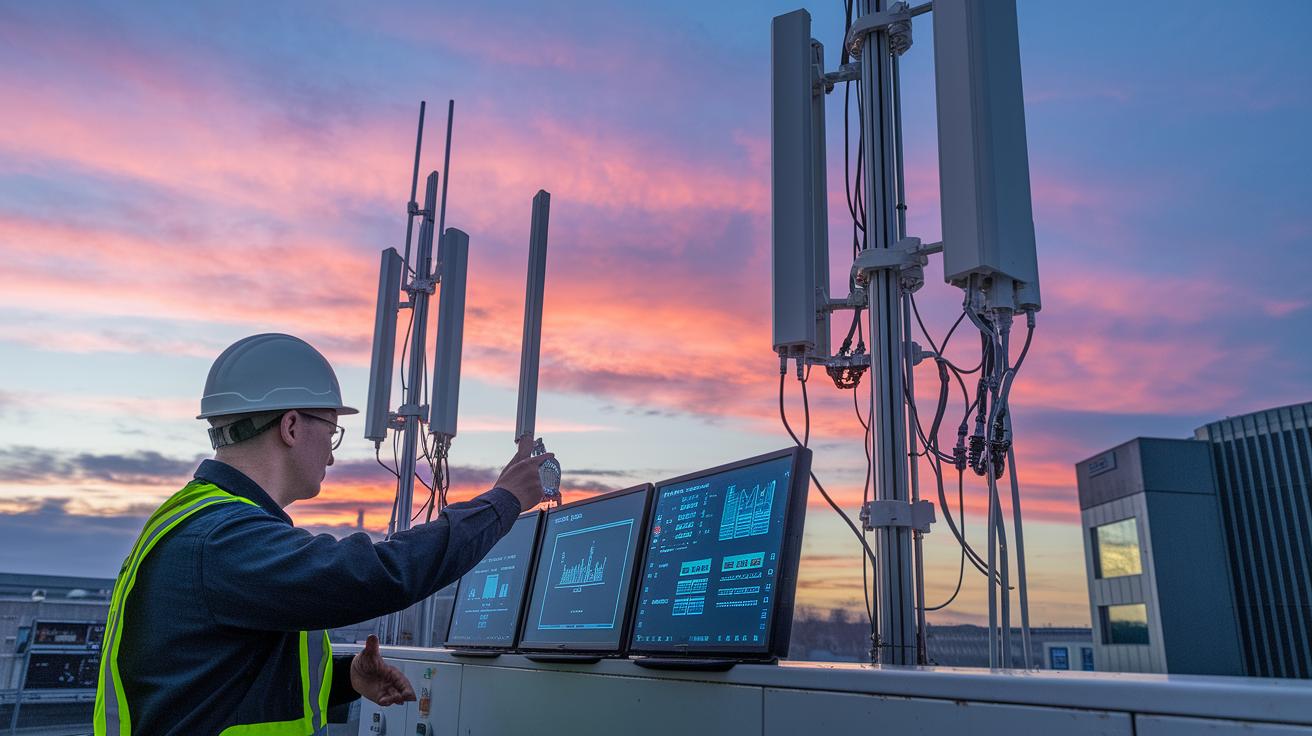
Tech trends are reshaping how businesses work and interact with gadgets. With 5G rolling out fast, industries like healthcare, manufacturing, and enterprise are starting to enjoy faster, more responsive systems. Meanwhile, early hints of 6G are already stirring up excitement with plans for terahertz frequencies and smarter antenna setups (advanced ways to send and receive signals) that could drop response times to almost nothing. And don’t forget IoT: more than 75 billion devices are set to link together, thanks to edge computing (processing done close to where data is made) that makes real-time data crunching a breeze.
5G Expansion
5G is taking off quickly, and private networks are popping up in many sectors. Businesses are getting ready to enjoy lightning-fast connections and almost zero delays. Imagine remote surgeries happening safely, smart factories buzzing with efficiency, and logistics that run like a well-oiled machine. Devices are now sharing information in the blink of an eye, helping companies keep things running smoothly even when the pressure is on.
6G Research
Exciting work is underway as researchers explore what 6G might bring. Early tests hint at cool uses like remotely controlling robots and powering super-responsive smart cities. Scientists are busy fine-tuning the technology to meet real-world needs, with a big focus on using terahertz frequencies and advanced hardware to cut response times down to less than a millisecond for those life-critical moments.
IoT-Edge Integration
Edge computing is a key player for IoT plans in 2025. By handling data right where it’s made, this approach cuts down delays and makes everything run more smoothly. It’s especially important for smart sensor networks and apps that need immediate responses. In a world with billions of connected gadgets, processing data on the spot ensures that everything clicks together in real time.
Cybersecurity Defense Strategies in Emerging Technology Trends 2025
Digital changes are making companies rethink how they keep their systems and data safe. More businesses are using fast-response tools like advanced threat intelligence platforms and automated defense systems to fight new risks. With more operations moving online, it's clear that strong cybersecurity is a must. In simple terms, companies now want systems that can watch, detect, and block bad behavior instantly to protect important data in our growing digital world.
Key security tools are leading the way. Many organizations are using cloud security methods such as zero-trust setups (which always verify users), micro-segmentation (dividing networks into smaller parts), and secure access service edge (SASE, a way to manage remote access securely). They are also adopting designs that build privacy from the ground up and using AI-based monitoring to stick to strict rules. Experts like Gartner even expect a 40% increase in security automation uses, showing that businesses see the need for smarter, quicker defenses when breaches can happen anytime.
Looking ahead, cybersecurity is all about creating strong, lasting protection at every level. Leaders are working to weave these new tools into long-term plans that protect both data and systems as threats change. This forward-thinking strategy helps organizations adapt and stay ahead in an increasingly cloud-based and connected future.
Sustainable Digital Solutions in Emerging Technology Trends 2025
Companies are switching to digital systems that use energy smarter and cut down on waste. They are moving away from old-school methods and rethinking how to work in a cleaner, greener way. This change not only helps the planet but also saves money.
Green tech is getting a lot of attention these days. New eco-friendly setups use designs that lower waste and increase energy savings. For example, advanced solar panels and smart grid tools help businesses test ideas in real time. Digital twins (exact virtual copies) let companies try out different energy plans before making big decisions.
Innovative climate technologies are also making a big impact. AI-driven tools now simulate carbon capture and plan resource use to tackle environmental challenges head on. These smart solutions give businesses the support they need to build a sustainable and competitive future.
Digital methods now mix innovation with a commitment to nature. Companies use data-driven systems to keep an eye on power usage and find ways to cut costs while caring for the environment. In doing this, they help pave the way for cleaner cities and smarter industries.
In short, these new digital solutions are a big step toward a sustainable future. They show that technology can be both powerful and kind to our world, leading us to greener, smarter, and more affordable ways to do business.
Robotics and Automation Enhancements within 2025 Technology Trends
AI-powered robots aren’t just simple machines anymore. They’ve grown into smart helpers that can see, sense, and make decisions without waiting for a human cue. Imagine a robot on an assembly line that quickly spots a misalignment and fixes it right then and there. These clever systems use local sensor data processing (where data is analyzed near the source) with the help of edge computing to act fast. In simple terms, robots now adapt on the fly, making quick decisions that keep operations running smoothly and nip problems in the bud.
Robotic Process Automation, or RPA, is also set to shake things up by handling about 30% more everyday tasks in places like finance and HR. Picture sensors that keep an eye on machines around the clock, predicting when maintenance is needed and cutting downtime by roughly 25%. With this system, even a small glitch gets spotted early, saving the day before it turns into a bigger issue. Both office environments and factory floors benefit from this fast response and smarter upkeep, making everything work a bit more like clockwork.
Digital Transformation Evolution and Industry 4.0 in Technology Trends 2025

Today, digital transformation meets Industry 4.0 in a way that completely changes how businesses operate. This powerful mix lets data flow smoothly in real time, helping companies adjust quickly as conditions change.
Business Orchestration & Automation Technologies, or BOAT (tools that help teams work together), create a seamless workflow. They bring people, systems, data, and tools into one connected circle. Imagine a dashboard that automatically updates customer orders when inventory shifts.
Industry Cloud Platforms now focus on specific sectors, offering specialized digital tools instead of a one-size-fits-all solution. This tailored approach cuts out unnecessary repetition and builds on the advantages already mentioned.
Smart manufacturing is also stepping up its game. By using digital twins (exact digital copies of real objects) and simulation software, factories can test and fine-tune production processes while the real assembly line is running. Think of it like a virtual factory that catches problems before they happen.
Final Words
In the action, this article explored how technology will reshape our world, from smarter AI and quantum computing to advanced connectivity, stronger cybersecurity, sustainable digital solutions, and innovative robotics. Each section highlighted how these trends work together in real life, sparking improvements in industry and daily routines. Exciting progress awaits, and the insights provided here keep us ready for a future full of potential in emerging technology trends 2025.
FAQ
What are the biggest emerging technology trends in 2025?
The emerging trends in technology include AI advancements, enhanced connectivity with 5G and early 6G, quantum computing breakthroughs, and smart IoT integration, which together transform business operations and daily interactions.
Which technology is most in demand in 2025?
The most sought-after technology is AI, as it drives automation, predictive analytics, and decision-support systems that help businesses boost productivity and streamline daily tasks.
How will technology look in 2025?
Technology in 2025 will feature smarter devices, seamless connectivity, and integrated digital ecosystems that make tools more intuitive and everyday tasks easier through automation and real-time data processing.
What trends will be popular in 2025?
Trends set to shape 2025 include large-scale AI integration, quantum computing progress, robust IoT-edge strategies, and sustainable digital solutions that support efficient, eco-friendly operations across industries.
What resources detail trends like McKinsey and Deloitte Tech Trends 2025?
Industry leaders like McKinsey and Deloitte offer detailed PDF reports that cover key advancements, including AI, digital transformation, and connectivity breakthroughs, providing insights that help businesses prepare for the future.
Are detailed reports available for understanding 2025 tech trends?
Yes, comprehensive PDFs such as McKinsey Technology Trends Outlook 2025 and Tech Trends 2025 provide in-depth analysis on emerging technologies, offering valuable guidance for both business and tech enthusiasts.
What do digital transformation trends in 2025 entail?
Digital transformation trends involve integrating AI, automation, and smart manufacturing to create unified, efficient workflows that improve how industries function and interact with digital tools.
How do 2025 trends relate to upcoming trends in 2026?
The breakthroughs seen in 2025, like advanced AI, IoT expansion, and sustainable solutions, lay the groundwork for continued innovation, setting a strong base for similar progress in 2026.