

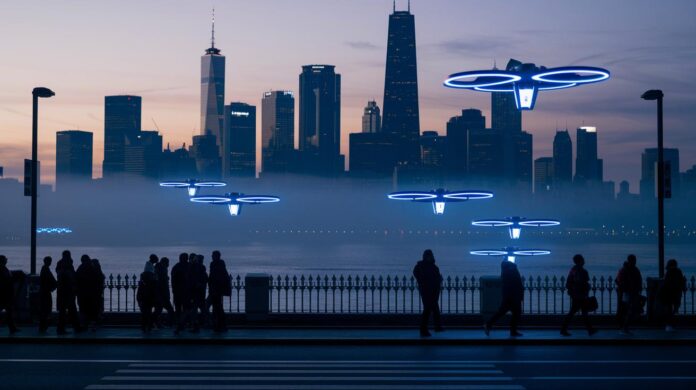

Have you ever wondered if drones could change your world? Today's drones are real and helpful. They build bridges, speed up emergency care, and even protect our gas systems with smart sensors (devices that gather information) that seem straight out of another planet.
Imagine a team of drones moving with the precision of expert dancers. Each move is exact and strong. In this post, we explore how these flying wonders brighten our future by blending clever robotics with everyday benefits.
How Futuristic Drones Are Transforming Aerial Capabilities
Futuristic drones are changing the game in unmanned flight. They mix smart flight systems with clever robotics to do more than just fly around. They work on tasks like fixing up infrastructure and even helping in emergencies. For example, scientists turned a NASA methane sensor (a tool that detects gas leaks) built for Mars into a way to keep our gas pipelines safe. Surprising, right? A sensor made for exploring Mars now helps protect our energy supply.
In Zürich, small quadcopters team up to build rope bridges you can walk on. Each drone carries a motorized spool of rope and works together with the others, showing off the power of teamwork. And over in Singapore in 2015, a project used drones with sensors to pick up cellphone and Wi-Fi signals for marketing purposes. These early wins opened the door for even bolder ideas, like drones that come with 3D printers to scan and fix broken parts of our structures on the spot.
New medical drones now carry automated defibrillators to hard-to-reach areas, cutting response times compared to regular ambulances. And then there’s the Jetson ONE personal eVTOL (electric vertical takeoff and landing vehicle) that, thanks to its eight electric motors, completed a mountain rescue in Poland’s Tatra Mountains in just four minutes! With smart software and tough materials, these next-generation drones are bringing what once sounded like science fiction into everyday life.
Innovative Aerospace Drone Design and Aesthetics
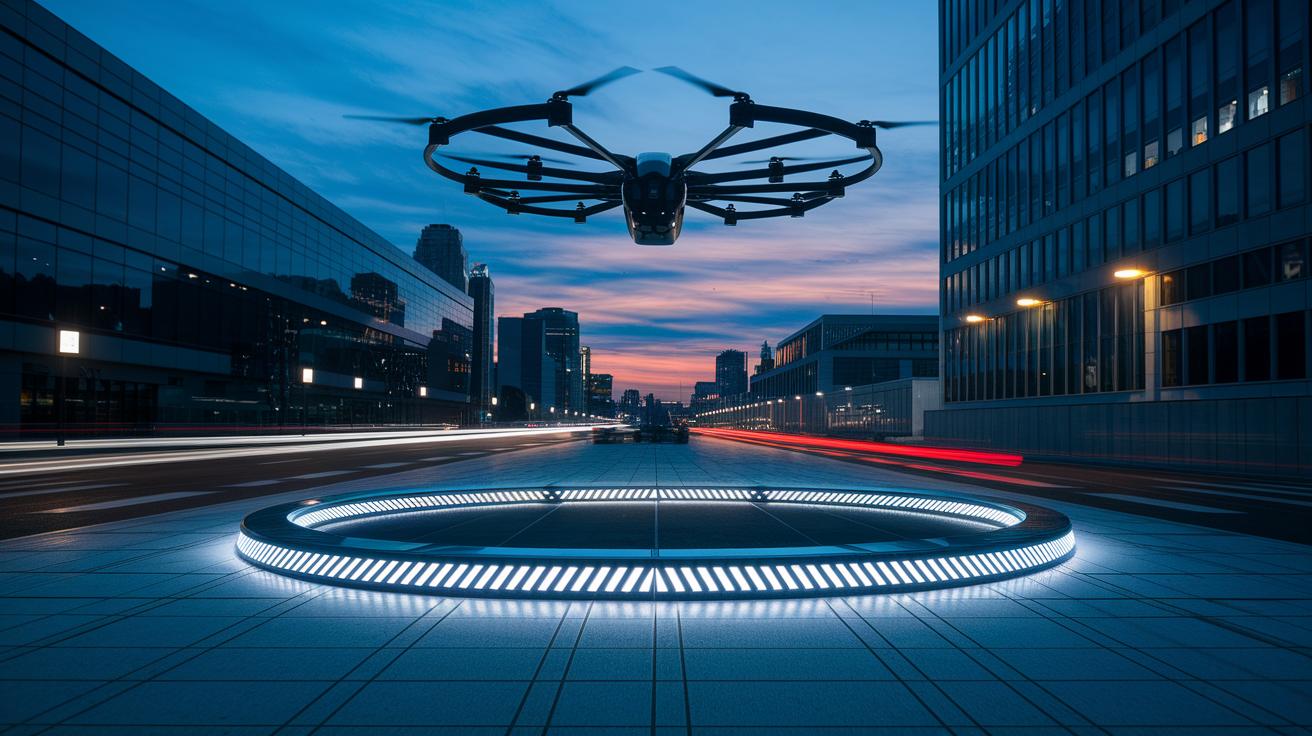
The Jetson ONE sports a light, tough design with an aluminum-carbon fiber frame that looks smooth and cuts through the air easily. It runs on eight electric motors that ensure sharp control and even have a backup in case one motor fails. Imagine a drone that stays steady like a well-balanced dancer, even if one move misses a beat.
Alina Sanina’s Lynx "Gothic Futurist Drone Station" pushes this idea even further. These circular hubs don’t just park your drone, they charge it, fix it up, and double as friendly public spots. They can turn into mini observatories, research nooks, or even snug resting areas, making them versatile hubs in our techy world.
Next, think of drone art that uses changeable outer designs and built-in LED lights to mix style with real-life function. It doesn't stop there, a smart navigation system rounds things out. You can use a mobile app to check route maps, get live weather updates, and even call for help with a built-in SOS feature. It’s a cool blend of clever tech and eye-catching design that makes drones both a joy to watch and super reliable when they’re in action.
Breakthrough Applications of Futuristic Drones Across Industries
Imagine fleets of drones working together like a well-rehearsed dance team. New swarm software allows many drones to adjust their courses at the same time, making large-scale tasks, like mapping vast farmlands, much more efficient.
Now, picture drones using a mix of sensors such as thermal (heat detection), hyperspectral (detailed color analysis), and LIDAR (light-based ranging). Experts say these new sensor tricks can increase detection accuracy by about 30%, giving industries like mining and energy much clearer data.
Recent updates to drone rules have opened up safer skies even in busy urban areas. Regulators are now pushing for simple, standard flight rules and real-time info sharing. This means emergency services and delivery systems can use drones more easily, reducing delays in risky spots.
| Innovation | Example Application |
|---|---|
| Swarm Software | Cooperative field mapping and coordinated search operations |
| Sensor Fusion | Better thermal and LIDAR imaging for industrial checks |
| New Regulations | Standard flight procedures making urban airspace safer |
Case Studies: Jetson ONE and Gothic Futurist Drone Stations

At the 2025 UP.Summit, Jetson ONE took center stage and changed the game in personal aerial travel. Known for its tough design and built-in safety features like the Jetson Airframe Parachute System (a quick-fall rescue tool), it wowed everyone during a rescue trial in Poland’s Tatra Mountains by reaching high peaks in under four minutes. One pilot even said, "I felt like I was flying on a cloud of innovation."
Microsoft Flight Simulator 2024 now lets you pilot the Jetson ONE through a realistic virtual cockpit view. This cool feature helps you experience unmanned flight in a way that feels both real and cutting edge.
Then there’s Alina Sanina’s Lynx stations, often called Gothic Futurist Drone Stations. These neat, round hubs combine drone storage, charging, and upkeep with everyday public services. They even show live weather updates and let you send an SOS from a mobile app, making drone work look easy and smart.
Overcoming Engineering Challenges in High-Tech Drone Development
Engineers have found smart ways to fix problems like heavy weight, backup system needs, energy use, and how sensors work together in different drone designs. They’ve even tackled tough tests in freezing weather and high-up rescue situations. For example, research into solar power helps drones fly longer by turning sunlight into extra energy, kind of like soaking up rays on a sunny day.
This overview connects back to earlier ideas on design and case studies, showing fresh approaches that boost overall drone performance.
| Challenge | Engineering Insight |
|---|---|
| Weight Reduction | Using aluminum-carbon fiber mix |
| System Stability | Employing backup multi-motor setups |
| Power Efficiency | Integrating advanced batteries with solar ideas |
| Precision Control | Blending sensor systems for various settings |
futuristic drones Illuminate Tomorrow with Innovation

AI-powered unmanned aerial vehicles (drones) are changing the way we manage our airspace. They now dodge obstacles on their own, plan new routes as they fly, and even predict when maintenance is needed thanks to machine learning (a way for computers to learn from data). Imagine a drone that shifts its path to avoid surprises much like a driver swerves to steer clear of a pothole.
Then there’s 5G, which is a real game-changer. With super-fast, low-lag connections, drones can stream live data and operate even when they’re out of sight, while still staying linked to their base. Picture flying a drone over challenging, remote areas and getting instant updates on wind speed or battery life.
Connectivity is getting smarter too. New mesh networks and satellite links work together like a group of walkie-talkies, ensuring drones stay connected even in tough or isolated spots. This steady connection is key for critical missions such as search and rescue or monitoring large infrastructures.
Engineers are also boosting drone performance with innovative propulsion. New designs like hybrid-electric and micro-turbine systems let drones reach speeds over 200 mph. Imagine a drone cutting across the sky like a flash of lightning, fast, agile, and incredibly efficient.
Green tech is on the rise as well. Solar-powered drones and eco-friendly designs are paving the way for longer missions. Today’s flight systems mix edge computing (processing data near the source), augmented reality interfaces, and real-time data analysis to offer pilots smart guidance and secure operations.
- AI and machine learning boost self-navigation.
- 5G delivers live, low-delay data.
- Eco-friendly designs extend flight endurance.
These breakthroughs are setting a fresh new standard in drone technology, making sure the future of air mobility is as clever as it is swift.
Final Words
In the action, we've seen how cutting-edge designs and real-world case studies demonstrate the power of futuristic drones in reshaping aerial tasks. The blog walked through design breakthroughs, engineering challenges, and emerging trends in autonomous tech. We looked at drones performing tasks like emergency response and infrastructure repairs, highlighting advancements in unmanned flight technology. From smart navigation systems to AI-powered flight, every innovation builds on the last. It's exciting to see these innovations take flight, promising a bright future for tech that keeps moving forward.
FAQ
What are futuristic military drones?
The futuristic military drones refer to next generation unmanned aircraft that use advanced tech for surveillance, combat, and communications. They rely on smart sensors and autonomous systems for improved defense operations.
What is a futuristic drone concept?
The futuristic drone concept envisions advanced unmanned flight systems that blend cutting-edge design with practical uses, like infrastructure repair and rapid emergency response, integrating smart sensors with modern aesthetics.
What does a futuristic drones list include?
The futuristic drones list includes a variety of designs, covering high-speed, autonomous models used in defense, infrastructure, and consumer sectors, all showcasing advanced features from smart sensors to innovative propulsion.
What are futuristic drone drawings?
The futuristic drone drawings are artistic renderings that combine technical detail with creative design, illustrating potential future models with sleek lines, modern materials, and imaginative flight features.
What defines sci-fi drone art?
The sci-fi drone art employs futuristic themes to portray drones in imaginative settings, using stylized designs and vibrant elements that spark creative ideas in drone design and engineering.
What is a sci-fi drone 3D model?
The sci-fi drone 3D model is a digital representation that brings advanced drone designs to life, allowing makers to study detailed structures and test concepts virtually before moving to physical builds.
What was the Seahawks drone show about?
The Seahawks drone show featured a coordinated performance where drones lit up the night sky with colorful patterns, merging sports entertainment with innovative drone choreography for a striking visual display.
What is the SiFly drone?
The SiFly drone is a specific model known for its innovative design and advanced functions, blending smart navigation with efficient engineering to serve both consumer and specialized industry demands.
What will be the future of drones?
The future of drones will bring more autonomous systems, longer flight endurance, and expanded roles in sectors like emergency services and infrastructure inspections, all driven by ongoing technological progress.
Why did the US ban DJI drones?
The US banned DJI drones due to concerns about data security and privacy issues, aiming to reduce risks associated with foreign technology in sensitive applications and operations.
What is the world’s most advanced drone?
The world’s most advanced drone features state-of-the-art sensors, autonomous capabilities, and a robust design optimized for long-range missions and emergency responses, representing a high-tech leap in aerial innovation.
Can a drone fly 300 miles?
A drone can fly 300 miles if it is equipped with efficient battery systems, extended endurance features, and optimized aerodynamics. Its range depends on factors like payload, weather, and specific design parameters.