



Have you ever wondered how energy-based weapons might change modern warfare? Instead of using regular bullets, armies are now testing tools like naval lasers (powerful light beams used to hit targets) and railguns (guns that use magnets to launch projectiles). These gadgets use smart sensors and A.I. (artificial intelligence, which helps machines make fast decisions) to adjust shots instantly.
They save money and hit targets more accurately than old-style guns. In this post, we’ll break down how these exciting new weapons work and why they could be the future of combat.
What Defines a Futuristic Weapon?
Futuristic weapons use energy-powered projectiles, setting them apart from old-school guns. New designs rely on directed energy (focused power from a device). For example, naval lasers have grown from 10 kilowatt models to ones already at 30 kilowatts, and soon they might hit 60 kilowatts! This makes each laser shot cost under $10, a huge save compared to a $100,000 missile. Plus, these systems use real-time sensors teamed up with AI fire control, so they can adjust quickly during a fight.
Another standout feature is electromagnetic railgun technology. These weapons can launch projectiles at speeds greater than Mach 7, showing just how powerful modern combat tools can be. There’s also talk of plasma weapons (tech that fires hot, charged bolts) that could punch through armor easily. Digital targeting systems now crunch battlefield data in seconds, ensuring every shot is smart and precise.
On the flip side, traditional firearms work by shooting solid bullets using chemical propellants and simple mechanical triggers. They lack the smart sensors and digital analysis that futuristic arms bring to the table. While older weapons follow predictable ballistics, modern systems use energy-based shots and precise targeting, sometimes even delivered by futuristic drones, to act faster and more accurately. This shift from physical munitions to energy shots is changing the battlefield, promising a future where speed, control, and cost savings redefine combat.
Evolution of Futuristic Weaponry in Media and History

Long ago, imaginative writers sparked ideas that felt like pure magic. In H.G. Wells’ 1898 novel, the Heat-Ray imagined a tool powered by light and heat, lighting a fire in our minds. This wild idea later jumped into movies as plasma bolts from Predator’s Plasmacaster and the sleek stun of Star Trek phasers (we call these directed-energy weapons). And then there’s the Ghostbusters’ Proton Pack, a quirky mix of nuclear power and the supernatural that made us question what was really possible. The M41A Pulse Rifle, firing 10 mm caseless, armor-piercing rounds, brings fiction a step closer to the future of combat tools.
Movies and TV shows have nudged real-life research too. Films like Starship Troopers flashed mini-nuke arsenals, and RoboCop introduced us to the relentless ED-209. These screen moments planted tiny seeds of inspiration that modern engineers now water and nurture. Designers, watching these dramatic effects, work to turn imagination into reality. It’s a vibrant mix of creativity and tech that might one day change how we think about weapons entirely.
Technologies Powering Futuristic Weapon Concepts
Railgun Principles
Railguns use powerful magnets to push metal slugs at speeds up to Mach 7. They rely on special barrels made of heat-resistant materials to handle the heavy friction. Think of it like a mini high-speed train that quickly moves a steel bullet along two insulated rails. Recent tests show these railguns hit high speeds while keeping their barrels strong, thanks to improved design that supports long-range performance and lasting durability.
Directed-Energy Laser Systems
Directed-energy lasers have moved from lab experiments to real-world tests. Early versions produce about 30 kilowatts of power, and new models are being built to reach 60 kilowatts for defense and attack roles. Each laser shot costs only around $10, much less than the nearly $100,000 needed for a missile. Enhanced sensors help the laser target threats quickly. Imagine a precise beam cutting through an incoming missile in a flash with rapid pulses and real-time adjustments.
Guided Munitions
Guided munitions now come with smart sensors and self-control that adjust their path while in flight. DARPA’s EXACTO guided bullet, proven in live tests back in 2015, shows how accurately these systems work. Similar technology is used in other systems that rely on continuous sensor feedback for pinpoint accuracy. Some newer designs even borrow ideas from quantum energy gun models, tweaking their flight paths to hit small targets. This smart ammunition adapts during battle, ensuring top performance as conditions change.
Real-World Prototypes of Futuristic Weapons
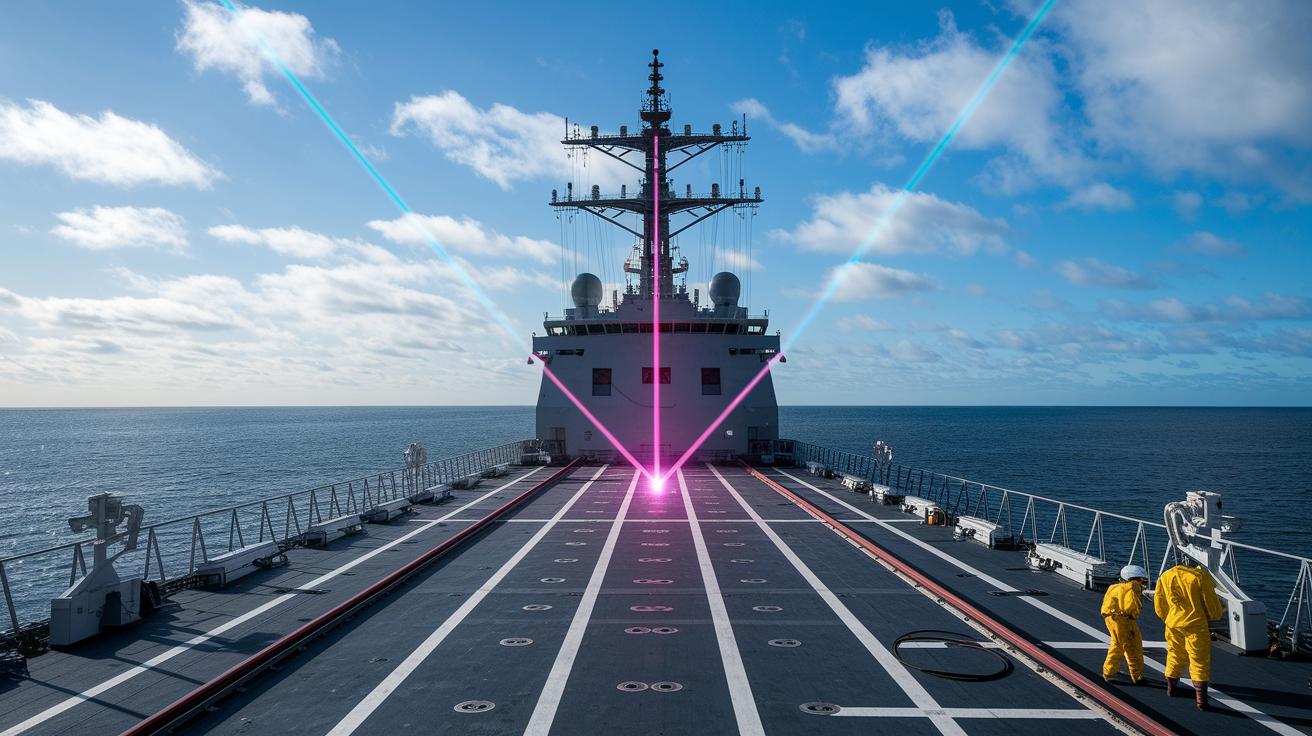
Recent tech breakthroughs have turned futuristic weapon ideas into real tests. The British Navy is working on a 30 kW laser system that will be ready by 2027. This tool shows how energy-based weapons are leaving the lab and moving into active use. Years of testing have helped sharpen digital targeting and remote control features. For example, the ADS is a microwave crowd-control tool first used in 2010 that creates quick, strong effects to discourage threats without using regular munitions.
Other exciting inventions include robotic guns like SWORDS, tested in Iraq back in 2007, and the SGR-A1, a sentry bot that uses voice commands to aim. These gadgets push the limits of machines that can act on their own and even have cool holographic targeting features to speed up response times in battle. On a smaller scale, DARPA is also testing insect-size flying machines that use face-recognition (a system that identifies people) to help with ground surveillance. Engineers are busy making these tools smaller and more precise, proving that soon they might become common in real combat.
| Weapon System | Type | Key Specs | Deployment Status |
|---|---|---|---|
| Laser C-II | Directed-Energy Laser System | 30 kW power, planned scaling to 60 kW | Planned for 2027 |
| ADS | Microwave Crowd-Control Weapon | Induces intense pain in 5 seconds | Deployed in 2010, later recalled |
| SWORDS | Robotic Gun | Autonomous operations with digital targeting | Tested in Iraq, 2007 |
| SGR-A1 | Sentry Bot | Voice-activated targeting system | Operational |
Conceptual Design Visions for Futuristic Weaponry
Modular hardware is taking the lead in fresh design ideas. New plans include snap-on energy packs that easily click into railgun systems, letting you upgrade quickly and choose the power you need. Designers picture parts that fit together just like building blocks. Think of energy modules that connect as simply as Legos, instantly boosting a weapon's power. This method promises more options and quick changes in the heat of battle.
Human-machine systems are changing how users work with weapon setups. Digital displays over your view (augmented-reality HUD overlays) highlight several targets right away, while advanced bio grips let you control the gear with your brain signals. Picture using your thoughts to aim, a setup that moves as naturally as you do. This smart control blurs the line between human and machine, making the experience both natural and effective.
New looks mix style with function in adaptive ammo design. Barrels reinforced with nano-tubes (tiny tubes that make things stronger) are tougher against heavy impacts and give a slick, modern vibe to the weapon. Bold ideas, like weaponry you control with your mind, stretch creative limits by blending next-level materials with fresh design. The result is tech that’s as eye-catching as it is powerful.
Feasibility and Impact of Futuristic Weapon Systems

Energy is a major headache for future weapons. Engineers have to make power sources small enough to be portable, like a battery that could fit in a soldier’s pack, while still packing enough punch to run a 60 kW laser. Imagine trying to power a super bright laser with something so small, it’s a real brain-teaser. Plus, when you fire these lasers, they create a ton of heat that must be cooled off quickly. Each shot might cost less than $10 compared to a $100,000 missile, but keeping everything cool during nonstop use is a serious engineering challenge. It’s a bit like tuning a high-performance engine in a tiny, portable car.
Policy rules make things even more complicated. Treaties like the 1967 Outer Space Treaty set firm limits on where powerful weapons can be placed, keeping them off space or out of certain areas. Systems that use automated fire-control and brain-linked (neural interface) technology stir up big questions about who is really in charge. Defense teams have to balance fast-moving tech advances with laws meant to protect public safety and keep international peace. In truth, while directed energy weapons can save a lot of money, they also have to pass through a maze of strict legal rules about when and where they can be used.
Ethical issues also come into play when high-tech targeting meets human judgment. Take neurostrike weapons, which are designed to mess with an enemy’s thinking, they really push the line of what’s okay in battle. There’s a lot of debate over how much freedom such systems should have when they depend on advanced safety checks. Sure, integrated fire-control systems can improve accuracy but there’s always the worry that the artificial intelligence behind them might misread a situation. In the end, finding the right mix between battlefield effectiveness and ethical responsibility is a big challenge for both military planners and lawmakers.
Final Words
In the action, our post broke down the core traits shaping a futuristic weapon. We explored energy outputs, smart targeting, and prototypes that push digital targeting advancements to new heights. The discussion spanned from railgun propulsion to advanced sensor systems showcased in modern combat technology. Each section revealed how cutting-edge designs and real-world tests bring science fiction closer to practical applications. It’s exciting to see tech innovations lighting the way for groundbreaking steps in defense. Embrace the future with curiosity and anticipation.
FAQ
What are futuristic weapons?
The futuristic weapons refer to advanced combat armaments featuring energy-based projectiles, smart digital targeting, AI-guided fire control, and sensor integration that offer improved efficiency over conventional firearms.
What does “Futuristic weapons nyt” mean?
The phrase “Futuristic weapons nyt” highlights topics covered by outlets like NYT that examine cutting-edge weapon designs, prototype systems, and how modern media portrays advanced combat tools.
What are futuristic weapons ideas?
The futuristic weapons ideas focus on concepts using directed-energy lasers, electromagnetic railguns with high velocities, and other smart munitions that merge digital analytics with innovative design.
What is a futuristic weapon list?
The futuristic weapon list gathers modern prototypes like railguns, high-power laser systems, and AI-enabled targeting weapons that showcase evolved technology and real-time sensor integration.
What is a sci-fi weapons list?
The sci-fi weapons list features iconic armaments seen in films and literature—phasers, plasma rifles, and other concept weapons that inspire real-world advanced combat research.
How does a sci-fi weapons generator work?
The sci-fi weapons generator creates random designs by combining digital targeting features and energy-based concepts, offering imaginative blueprints that mix fiction with emerging tech in weaponry.
How does a futuristic weapons mod in Minecraft work?
The futuristic weapons mod in Minecraft integrates advanced digital targeting and energy-based setups into gameplay, letting players experiment with high-tech combat systems in a virtual world.
Is the Tec 9 still illegal?
The Tec 9 remains under strict regulatory controls where bans or restrictions apply; its legal status varies widely based on local firearm laws and governmental policies.
Is the PP90 a real weapon?
The PP90 is indeed a real weapon, recognized for its compact design and rapid-fire capabilities, though its regulation and availability differ by country and legal jurisdiction.
Which is the most advanced weapon?
The most advanced weapon typically blends energy-based technology, smart targeting systems, and real-time digital controls; examples include modern railgun prototypes and high-power directed-energy laser systems.