



Ever wondered how factories turn basic production into a smart, sleek process? Industry 4.0 mixes digital tools with real-world machines, crafting smart factories that work like a well-tuned band. Imagine sensors and software watching every detail, just like a buddy who always has your back.
This post dives into how tech like the Internet of Things (smart devices that share data), artificial intelligence (computers that think like humans), and digital twins (virtual copies of real systems) boost efficiency and reliability. We break these ideas down so you can see how modern factories are setting a new standard in production.
Industry 4.0 Technologies Explained: Bold Perspectives
Industry 4.0 is all about mixing digital tools and real-world machines to build smart factories. Imagine machines, sensors, and software working together like a band in perfect harmony. Before real-time analytics (using data instantly) came along, factories often missed little changes in production, like flying without any instruments. Digital technologies such as the Internet of Things (a network that links devices), big data analytics (finding clues in huge amounts of info), and cloud computing (storing data on remote computers) power this change.
Advanced systems now use artificial intelligence (computers making decisions like people) and augmented reality (adding digital images to the real world) to make everyday tasks smoother. Digital twins, which are virtual copies of real machines, let manufacturers try different production methods and spot problems early. Autonomous robots and 3D printing make the whole process more flexible and precise, so tasks like scheduling, monitoring, and overall automation get handled seamlessly.
These smart factories come with key tools like Intelligent MES (systems that manage manufacturing), Production Schedule Intelligence, Connectivity Hub, and ERP Connectors. They work together to boost productivity by up to 60% and help improve quality, sales, and profits. It’s like turning tough manufacturing challenges into simple, manageable steps. Next, picture an industrial setup where every bit of data works together to make operations smoother and more efficient, setting a new benchmark for planning and success in the industry.
Industrial IoT Integration in Industry 4.0
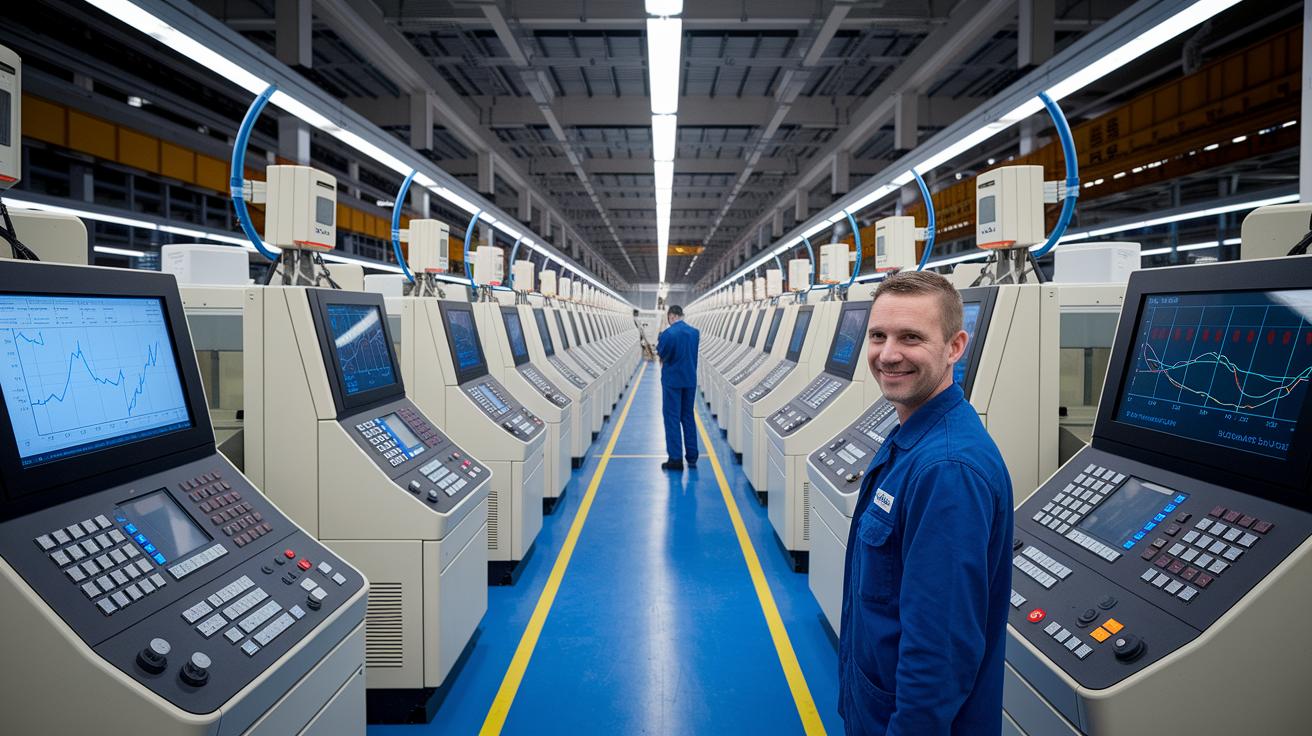
In today's smart factories, Industrial IoT connects machines and smart sensors to keep track of everyday operations. Here's a fun fact: modern sensors can detect a machine's heartbeat, alerting operators before a small issue turns into a big problem.
Smart sensors, friendly software, and automated systems team up to gather live data from equipment. Often, these setups mix connectivity hubs with machine monitoring modules to cut down errors. In some cases, they've slashed mistakes by up to 99%, keeping a steady eye on machine performance.
Standard IoT communication protocols (simple rules that let devices talk to each other, like how smartphones send texts) make it easy for devices to share info. This smooth connection helps spot issues early, supports automatic changes in production, and makes preventive maintenance simple.
Some common integration strategies include:
- Reliable sensor networks that capture live data from machines
- Centralized data nodes for immediate reading reviews
- Continuous equipment monitoring to catch performance dips early
By syncing these systems, smart factories keep a steady pulse on production. This leads to smoother operations and fewer unexpected downtimes.
Artificial Intelligence and Machine Learning in Industry 4.0
Imagine a factory machine that can spot its own glitches before they even happen. That’s the magic of artificial intelligence (AI, which means computer programs that learn and adapt) and machine learning (tech that gets smarter with data) in smart factories. These tools dig through loads of production data to uncover hidden patterns and give a clear view of the whole operation. They work like experienced supervisors, noticing unusual sensor readings that might hint at future issues.
These smart systems help fine-tune production schedules by keeping an eye on live equipment data. For example, if a sensor shows a tiny shift, the system tweaks the schedule fast so nothing breaks down. Before these advances, plant managers had to wait until something went wrong before they could act. Now, machines send alerts hours in advance, which means fewer delays and smoother daily runs.
And there’s more. Cloud-based control setups join the mix, letting managers make quick, smart decisions in real time. By linking up with the cloud (a network of online servers), AI can monitor many production lines or even whole plants at once. This cuts down unexpected downtimes with clever predictive maintenance.
Key benefits include:
| Key Benefit | Description |
|---|---|
| Early Risk Detection | Spotting potential issues right from the sensor data. |
| Auto Schedule Adjustments | Tweaking work schedules on the fly to avoid breakdowns. |
| Enhanced Alerts | Quick notifications that catch problems before they grow. |
Machine learning also plays a huge role in boosting performance. With each cycle, these algorithms learn what works best and fine-tune future decisions. In short, AI and machine learning help factories stay ahead of hiccups, cut unexpected stops, and make every step count toward better efficiency.
Robotics and Automation Systems in Industry 4.0

Picture a factory where machines work together like a close-knit team. That’s the promise of using robots and smart systems in today’s Industry 4.0. In smart factories, robots and automation handle tasks seamlessly. For example, small mobile robots zip around carrying materials, while shuttle systems swiftly move items in and out of storage. Tools like Easy WCS (a system for controlling material flow) and intelligent ERP connectors (programs that help businesses manage their work) work together to boost productivity by up to 60%.
The secret behind this success is multi-sensor data fusion. Sensors pick up real-time information so that even tiny mistakes get fixed instantly. Imagine a stacker crane that smoothly shifts its position when orders spike, it stops delays before they happen.
Some popular applications of these automated systems include:
| Tool | What It Does |
|---|---|
| Autonomous Mobile Robots | Handle materials throughout the factory |
| Shuttle Systems | Quickly move items for storage and retrieval |
| Stacker Cranes | Store items efficiently in tight spaces |
| Conveyors and Robotic Arms | Pick and place items with accuracy |
| Automated Guided Vehicles (AGVs) | Transport goods precisely around the site |
Each of these tools plays a part in making operations reliable and smooth. In a setting where every second counts, using these systems is like having a team of tireless workers who never sleep. It keeps the whole production line balanced and efficient.
Digital Twin and Production Simulation in Industry 4.0
Digital twins create a live, virtual copy of real machines and the processes they follow. Picture your favorite gadget coming to life on a screen, showing what’s happening right now. It’s like having a magic mirror that never hides anything. Factories can test out different production ideas in this digital world before changing anything in real life. Think of it as spotting a small glitch before it turns into a big, rainy problem.
This technology uses computer models (virtual factory design) to let you experiment safely. Managers can catch issues early, plan maintenance ahead, and cut down on unexpected stops. It’s similar to trying out a new recipe in a small kitchen before cooking for a crowd. As a result, production runs smoothly, and decisions can be made on the spot.
| Digital Twin Feature | Benefit |
|---|---|
| Real-time Asset Visualization | Quickly spots issues |
| Scenario Simulation | Makes production scheduling better |
| Historical Data Integration | Helps with predictive maintenance |
Additive Manufacturing and 3D Printing in Industry 4.0

Additive manufacturing creates things one layer at a time. This method helps make prototypes fast and builds even the trickiest parts with ease. In many smart factories today, it speeds up production while using fewer materials. Did you know that before digital designs, prototypes took weeks? Now a part can be printed in just a few hours, slashing production cycles.
3D printing finds its way into many fields such as aerospace, defense, medical gadgets, and large machinery. For example, a lightweight piece for a medical device can be printed with precise, intricate shapes. Designers use CAD software (a tool for making detailed digital models) to adjust digital designs before the final product is printed.
These innovative techniques give designers real flexibility. Custom parts can be made quickly, cutting delays and costs. Even small production runs now match the quality of larger ones. Rapid prototyping lets companies test ideas fast and tweak designs before going full scale. This nimble process not only speeds up production but also boosts quality and functionality. Overall, additive manufacturing and 3D printing change the game by reducing timeframes and expenses to keep up with today’s fast-paced industry.
Big Data Analytics and Cloud Computing in Industry 4.0
Big data analytics helps smart factories run smoother by gathering loads of sensor readings and machine info. It takes all that raw data, finds useful clues, and lets teams tweak daily production before small issues turn into big delays. Imagine a sensor sending a quick alert to operators so they can fix a glitch early. This simple, real-time feedback can boost performance by up to 60%.
Cloud-based control systems make things even easier. They offer expandable storage and smooth, real-time data processing, so teams can check production while they're anywhere. Managers can view live dashboards, follow updates as they happen, and even handle assets without needing to be on the factory floor. All the data comes together in one central hub, which means everyone can work in sync. This remote access cuts down wait times for on-site fixes, saving both money and downtime.
Together, big data analytics and cloud computing change the game on the production line. They allow for flexible scheduling, speedy adjustments, and a clear view of every step on the floor. With timely, real-time insights, teams can spot even small changes and keep everything running smoothly.
Final Words
In the action, we broke down smart factories using smart sensors, AI-powered systems, and robotics for enhanced production. The sections explained how a digital twin creates a virtual copy of a factory and additive manufacturing speeds up design processes. We also explored big data and cloud computing driving real-time insights. This blog gave a clear guide to industry 4.0 technologies explained, highlighting how these upgrades boost efficiency and drive productivity. It's exciting to see how these innovations shape a positive future for tech and manufacturing.
FAQ
What does “Industry 4.0 technologies explained Wikipedia” mean?
The Wikipedia explanation of Industry 4.0 technologies shows how digital and physical systems combine in smart factories. It outlines tech like IoT (devices linked by the internet), AI, robotics, and additive manufacturing.
How do Industry 4.0 examples and applications work?
The examples include smart factories using IoT sensors, digital twins, autonomous robots, and big data analytics. These applications improve automation, optimize production, and support predictive maintenance for smoother operations.
Where can I find Industry 4.0 resources in PDF or PPT formats?
PDF and PPT resources for Industry 4.0 provide visual guides and detailed reports. They offer clear overviews of tech stacks, benefits, and real-world manufacturing examples in an accessible format.
How does Industry 4.0 impact manufacturing and what benefits does it bring?
Industry 4.0 impacts manufacturing by merging advanced digital systems to boost production efficiency, minimize downtime, and enhance quality. It uses real-time data and automation to deliver significant productivity gains.
What are the key benefits of Industry 4.0?
The benefits include increased automation, improved data analytics, productivity boosts up to 60%, better quality control, and enhanced profitability through smart systems that streamline manufacturing processes.
What did Industry 4.0 technologies explained in 2022 include?
The 2022 explanation highlighted a digital platform integrating IoT, AI, cloud computing, and robotics. It focused on how these smart systems support automated production and real-time analytics across factories.
What are the 5 advanced technologies in Industry 4.0?
The 5 advanced technologies typically are IoT (networked devices), big data analytics, artificial intelligence, robotics (automated machines), and digital twins. They work together to streamline manufacturing and boost performance.
What are the key technologies of the Fourth Industrial Revolution?
The key technologies include IoT, AI, machine learning, robotics, cloud computing, and additive manufacturing. These technologies power smart factories and enable efficient, data-driven manufacturing processes.
What is the difference between Industry 4.0 and Industry 5.0 technology?
The difference lies in focus; Industry 4.0 centers on digital automation and data analytics, while Industry 5.0 emphasizes collaboration between humans and machines to produce more customized results.