



Ever wonder how tech could reshape our world? New figures suggest that by this year’s end, there may be over 1.5 billion 5G subscriptions.
Smart algorithms (systems that learn and adapt) could fuel a global market that soars past $200 billion. Cool, right?
These breakthroughs link us in ways we hadn’t imagined. They help speed up our work, solve everyday challenges, and create services that get smarter over time.
Every new step sparks another idea. It’s like watching a bright and clever future unfold right before our eyes.
Leading tech advancements shaping today’s industries
Tech advancements are changing the way businesses and communities operate. They bring new tools and methods that not only make work faster, but also unlock fresh opportunities for growth.
Recent numbers back this up. For example, 5G subscriptions could climb past 1.5 billion by the end of 2023, the global AI market might exceed $200 billion in 2024, and worldwide spending on cloud solutions topped $200 billion back in 2022. Intriguing, right? It shows these aren’t just ideas on paper.
- AI revolution
- 5G connectivity surge
- Cloud solution scaling
- Machine learning advances
- Quantum computing leaps
- Robotics revolution
When one breakthrough happens, it usually sparks another. Smarter AI helps us make better decisions, while faster 5G networks keep our interactions smooth in real time. Cloud services now manage massive data flows, and progress in machine learning and quantum computing opens up even more possibilities. All these interconnected innovations are reshaping today’s industries and setting the stage for even more exciting discoveries ahead.
AI and Machine Learning tech advancements powering innovation

AI got its start back in 1956 with a program called Logic Theorist that sparked the journey toward today’s clever algorithms. That early work set the stage for the helpful tools we use daily – from simple chatbots to smart systems that learn as they go.
Large language models have totally changed how we use technology. Generative AI systems, like ChatGPT, quickly caught on and reached 100 million users in just a few months. In 2022, spending on AI around the world jumped by 20% compared to the year before, pushing more research and creative breakthroughs. This progress means AI isn’t just about answering questions; it can also create content, solve tricky problems, and even compose music.
Machine learning now plays a crucial role in areas like healthcare, finance, and retail. In medicine, smart algorithms help spot problems early. Finance uses them to watch transactions and flag risks, while retail relies on similar systems to predict shopping trends and manage stock. Developers are eager to use new tools, such as AI-powered coding helpers, which offer on-the-fly code suggestions and quick error fixes.
Next-generation data analytics is booming too, with experts predicting the market will hit $150 billion by 2025. As these tools grow in strength, making sure they are used fairly and responsibly stays front and center.
Connectivity and Cloud tech advancements accelerating digital services
Technology is moving fast, and we now need networks that are both super speedy and nearly delay-free. Everyone, from everyday users streaming movies or playing games to businesses managing remote work, needs smooth, reliable connections. This rising demand is pushing improvements in network speeds and capabilities all around, whether you're in a busy city or out in the country.
5G is really shaking things up. It’s now available in over 60 countries and has more than 1 billion subscriptions as of mid-2023. This new tech helps power smart gadgets like IoT devices (small gadgets that connect to the internet), cool augmented and virtual reality experiences, and quick, real-time data checks. It blends our digital and real worlds to give you a steady, uninterrupted connection.
Cloud services are also changing the game. Big names like AWS, Azure, and GCP (Google Cloud Platform) saw a 33% growth in 2022. This strong trend is pushing many to use new approaches like serverless setups (where you don’t have to manage servers) and microservices (small, focused programs). These methods let developers build systems that are agile and efficient, which means better, more reliable digital operations for everyone.
Then there’s edge computing, where data processing happens close to where it’s needed. In 2022, deployments in manufacturing and logistics jumped by 25%. This approach cuts down on delays and makes digital services work even better for us all.
Robotics and Industrial Automation tech advancements transforming workflows
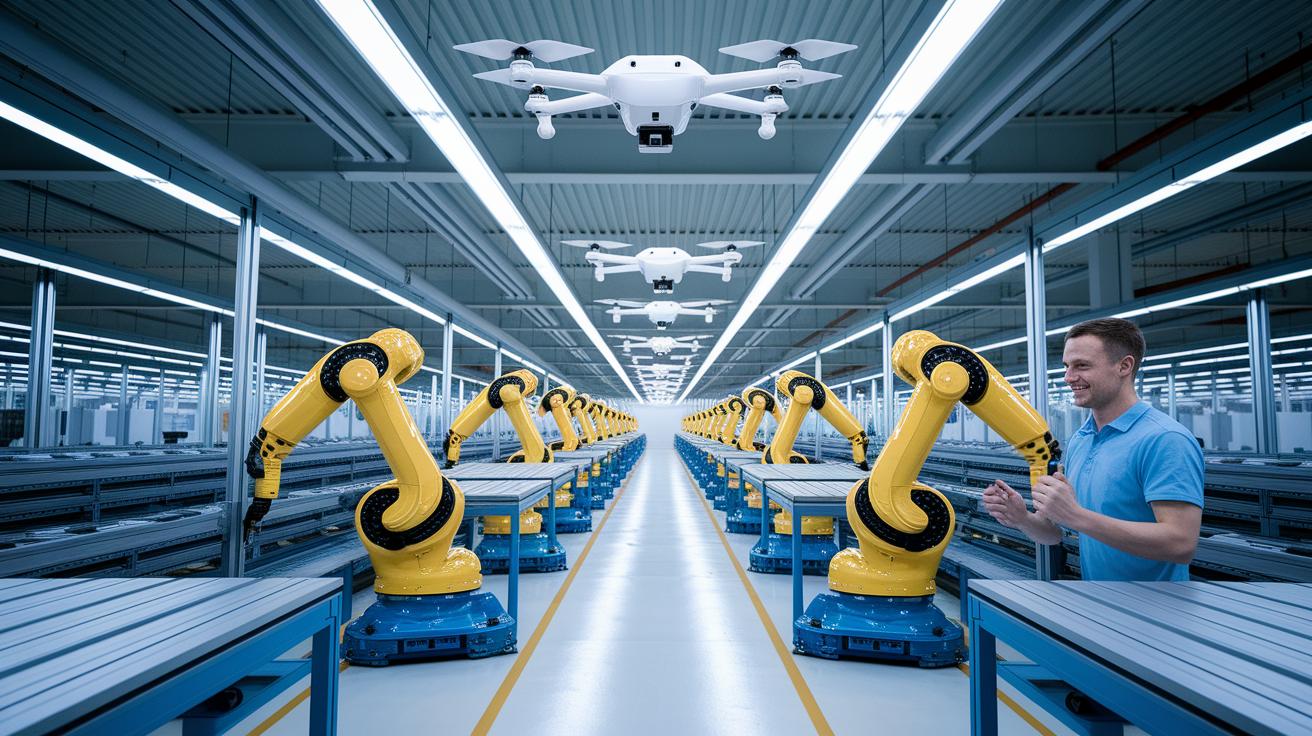
Automation in manufacturing and logistics is growing fast. Factories and warehouses now use smart tech to complete tasks with better accuracy and safety. It’s like having a helpful hand making everything run smoother.
Factory robots and cobots (collaborative robots that work closely with people) are leading this change. In 2022, a whopping 517,385 industrial robots were shipped worldwide. And guess what? Cobots alone grew by 40% that year. They quickly handle tasks like assembly, sorting, and packaging, so work flows better and meets rising demands.
Self-driving vehicles and drones are also stepping in. They logged over 10 million miles in tests in 2022, showing they can soon improve delivery systems in both urban areas and remote places.
Sustainable and Energy tech advancements driving green growth
Climate change is nudging us to rethink how we use energy. Environmental worries and shrinking resources are pushing engineers and researchers to find cleaner, smarter solutions. For instance, one coastal town switched to solar projects and cut its reliance on old fuels dramatically. This rush toward renewable energy isn’t just a trend, it’s a vital move for our future.
Green energy breakthroughs are lighting up the scene. Next-gen solid-state batteries (a newer battery type that lasts longer and charges faster) are set to hit the market by 2025. Solar panels have also improved, with efficiencies rising from 20% in 2015 to 26% in 2023, meaning they now catch more sunlight. Wind turbines are flexing their muscles too, with some models now topping 14 MW in capacity. Plus, biotech innovations are creating sustainable materials that reduce our environmental impact.
Green tech is reshaping how our industries work and how communities live. It’s driving cleaner energy systems and sparking more eco-friendly ideas across all sectors. This all-around push not only boosts industrial progress but also builds a sustainable, resilient future that benefits everyone.
Historical tech advancements that laid the groundwork for modern breakthroughs

People have always used creative ideas to change everyday life. Inventors turned simple thoughts into real tools that reshaped how we work and learn. They brought new ways to talk, light up our nights, and move around, which felt completely new at the time.
From mechanical gadgets to those early digital systems, every invention sparked changes we still feel today. Every big invention started with a brave idea. This wave of creativity built the blueprint for modern tech and continues to inspire new trends and digital shifts.
| Invention | Year | Impact |
|---|---|---|
| Gutenberg’s printing press | c.1440 | Mass book production and literacy surge |
| Watt’s steam engine | 1775 | Powered locomotives and factories |
| Edison’s light bulb | 1880 | Extended working hours with electric lighting |
| Bell’s telephone | 1876 | Enabled instant long-distance voice calls |
| Wright Flyer | 1903 | Laid the foundation for commercial aviation |
| Transistor invention | 1947 | Spurred microelectronics and early personal computers |
| Logic Theorist | 1956 | Pioneered early AI and generative computing models |
| Motorola DynaTac 8000X | 1983 | Introduced the first mobile phone with a 30-minute battery life |
| ARPAnet & Web debut | 1969 & 1991 | Kickstarted the global Internet and connectivity |
These early breakthroughs brought us to the fast digital world we see today. Inventions like the printing press and mobile phones set up the stage for our modern tech scene. Past creativity continues to spark amazing changes and drives us toward a bright, connected future.
Final Words
in the action, this article explored how various tech advancements, from swift 5G and power-packed AI to refined connectivity, streamlined robotics, and green energy breakthroughs, are reshaping industries. It highlighted impressive market milestones and painted a clear picture of modern tools built on historic innovations. The discussion ties together digital transformation progress and pivotal past inventions, giving readers a solid outlook on tech advancements. We’re excited to see these trends spark further innovation and open fresh possibilities in everyday life.
FAQ
Q: What are the top emerging tech trends and newest technologies?
The top emerging tech trends include AI, 5G connectivity, cloud computing, machine learning, quantum computing, and robotics. They drive rapid change across industries and boost digital services.
Q: What are some examples of tech advancements and new inventions?
The examples of tech advancements cover improved smartphones, AI-powered tools, advanced cloud services, and cutting-edge robotics. These innovations push digital progress and shape modern tech landscapes.
Q: What’s the latest technological advancement?
The latest technological advancement builds on breakthroughs in AI and 5G, leading to smarter devices and faster networks that enhance everyday digital experiences.
Q: What does an advancement in technology mean?
The term advancement in technology refers to a significant improvement in methods or tools that increases efficiency, opens new possibilities, and makes everyday life easier.